
EV Charging Calculator
Estimate dynamic charging times, real-world range addition, and utility energy cost savings based on your specific vehicle and connection parameters.
1Select Vehicle Model


2Select Charger Type
Plugs into standard domestic outlets—perfect for overnight stays and everyday light travel.
High-speed portable charging utilizing standard red or blue industrial power outlets.
Ideal for overnight charging with a single-phase power supply.
Faster daily top-ups with a three-phase power supply.
Maximum home charging speed with power sharing capabilities.
Commercial AC charging for fleets and destinations.
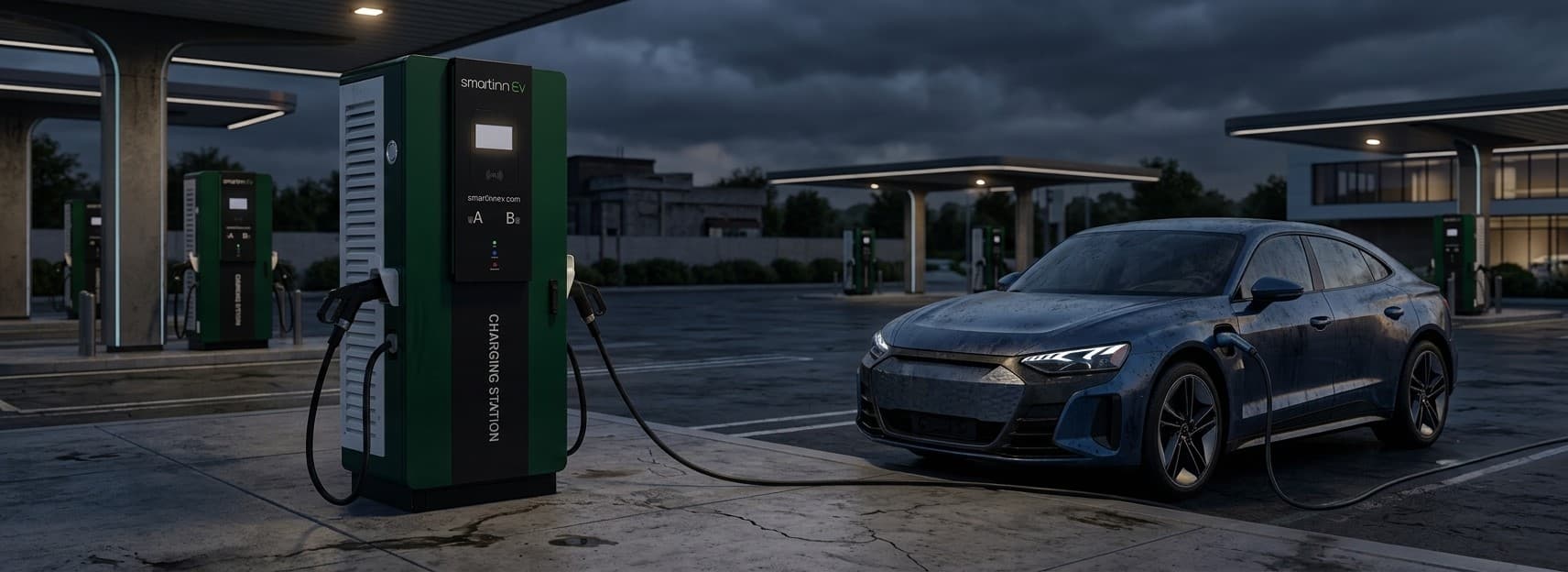
Ultra-fast public DC roadside charging station.
Next-gen megawatt charging for heavy commercial fleets.
3Configure Charge Thresholds
Active Battery Status
Session Projections
You save $3.92 compared to filling up a gasoline vehicle with equivalent range.
Understanding Charging Physics & Parameters
The DC Charging Curve
Unlike domestic AC charging (which supplies constant current), direct current (DC) fast charging follows an exponential curve. To protect lithium-ion anode structures from thermal plating, charging speed starts slowing down at 50% and drops significantly after reaching 80%. It is generally recommended to set daily charge limits to 80%.
AC vs. DC Infrastructure
AC charging relies on the vehicle's onboard converter to translate alternating grid currents to direct battery power. Direct Current (DC) fast charging bypasses the onboard converter entirely, connecting megawatt grid-grade rectification units directly to the high-voltage pack terminals, raising power from 11kW straight up to 1000kW.